


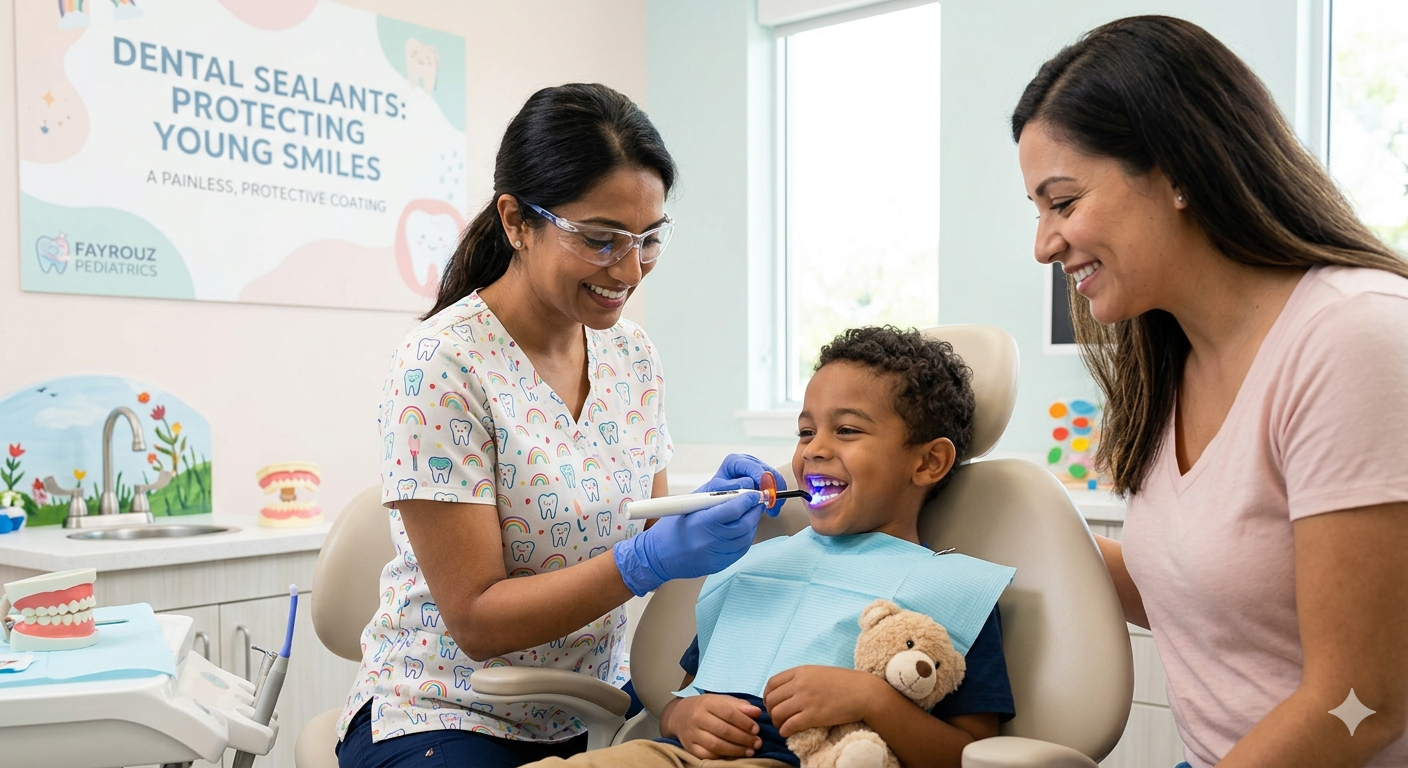
Maintaining a healthy smile for a child involves more than just a regular brushing routine; it requires a proactive approach to prevent decay before it starts. For many families navigating the busy lifestyle of the United States, finding efficient ways to safeguard their children’s oral health is a top priority. One of the most effective tools in a pediatric dentist’s arsenal is the use of dental sealants. These thin, protective coatings act as a shield, specifically targeting the areas of the mouth most vulnerable to cavities.
The back teeth, known as molars and premolars, have deep grooves and fissures that are often too narrow for toothbrush bristles to reach effectively. In these tiny crevices, food particles and bacteria can accumulate, leading to plaque buildup and eventually tooth decay. By applying dental sealants, we essentially “seal off” these danger zones. This article will explore why this simple procedure is a cornerstone of pediatric preventive care and how it supports a lifetime of healthy smiles.
Everything You Need to Know About Dental Sealants
To understand the value of this treatment, one must first understand what dental sealants actually are. They are a plastic, medical-grade resin coating applied to the chewing surfaces of the permanent back teeth. Think of them as a “raincoat” for the teeth; just as a raincoat keeps you dry in a storm, the sealant keeps acid and bacteria from touching the tooth enamel.
While the primary focus is often on school-age children, the benefits of dental sealants extend to any patient—including teens and adolescents—who may be prone to decay in the deep pits of their molars. The application is completely non-invasive, requiring no drilling or removal of tooth structure. This makes it an ideal option for families looking for quick, painless visits that don’t add to a child’s anxiety. When integrated into a comprehensive care plan at a clinic like Fayrouz Pediatrics, sealants provide a critical layer of defense that complements daily hygiene.
The Importance of Dental Sealants for Children
Children are particularly susceptible to cavities for several reasons. First, the enamel on newly erupted permanent teeth is not as hard as it will be as they age, making it more vulnerable to acid attacks. Second, children’s dietary habits—often involving frequent snacking or sugary treats—can increase the risk of decay. Finally, the dexterity required to clean the very back of the mouth perfectly is often not fully developed until the teenage years.
The importance of dental sealants lies in their ability to reduce the risk of decay by nearly 80% in the first two years after application. By preventing the initial cavity from forming, parents can avoid more complex and costly pediatric dentist treatment later on, such as fillings, crowns, or even root canals. For multicultural families who value long-term health investments, sealants offer an incredible return on health with minimal time commitment.
When Is the Right Time for Kids to Get Dental Sealants?
Timing is everything when it comes to preventive dentistry. The goal is to apply dental sealants as soon as the permanent molars erupt, before decay has a chance to settle into the grooves.
-
First Molars: These typically appear around ages 6 or 7.
-
Second Molars: These usually erupt around ages 12 or 13.
However, every child’s dental development is unique. During a routine check-up, your dentist will evaluate the “topography” of your child’s teeth. If a child has particularly deep fissures, the dentist might recommend dental sealants even earlier or on baby teeth if they show a high risk of decay. For parents of newborns and infants, it is never too early to discuss the future roadmap for sealants with your pediatric provider to ensure you are ready when those first permanent teeth break through the gums.
Step-by-Step Guide to Dental Sealant Application
One of the most common questions from parents is whether the procedure will be uncomfortable for their child. The answer is a resounding no. The process of applying dental sealants is quick, painless, and often takes only a few minutes per tooth.
-
Cleaning: The dentist or dental hygienist thoroughly cleans the tooth surface to remove any food debris or plaque.
-
Drying: The tooth is dried, and an absorbent material is placed around it to keep it moisture-free.
-
Etching: A mild etching solution is applied to the chewing surface. This slightly roughens the enamel on a microscopic level, which helps the dental sealants bond securely to the tooth.
-
Rinsing and Drying: The etching gel is rinsed away, and the tooth is dried once more.
-
Application: The liquid sealant resin is painted onto the tooth enamel.
-
Curing: A special blue light is used to harden the resin instantly, creating a durable, permanent shield.
The child can eat and drink immediately after the appointment, making it a perfect procedure for families needing quick visits between school and extracurricular activities.
How Long Can Dental Sealants Protect Teeth?
When properly maintained, dental sealants can protect the teeth for up to 10 years. However, they are not “set it and forget it” solutions. They can become worn or chipped over time due to the immense pressure of chewing. This is why regular dental examinations are essential.
During every six-month cleaning, the dental team will check the integrity of the dental sealants. If a portion of the sealant has worn away, it can be easily repaired or replaced. For teens and adolescents who may have more aggressive chewing habits or who play contact sports, monitoring the condition of their sealants is a vital part of their pediatric dentist treatment plan. As long as the sealant remains intact, the tooth surface underneath remains protected from the bacterial acids that cause cavities.
FAQ: Common Questions About Protective Coatings
Are Sealants Safe?
Yes, dental sealants are remarkably safe. The materials used have been cleared for medical use for decades. While some parents express concern about BPA, the amount of BPA found in sealants is extremely low—lower than what a child is exposed to in the dust of a typical household or through various food containers. The health benefit of preventing painful cavities and the need for more invasive procedures far outweighs any theoretical risk.
Do Sealants Replace Brushing and Flossing?
Absolutely not. While dental sealants are powerful, they only protect the chewing surfaces of the back teeth. They do not protect the areas between the teeth where a toothbrush cannot reach, nor do they protect the front teeth or the gum line. A child with sealants still needs to brush twice a day with fluoride toothpaste and floss daily to ensure total oral health. Sealants are a partner to hygiene, not a replacement for it.
Supporting Your Child’s Journey to a Cavity-Free Life
For families in the United States, especially those from diverse multicultural backgrounds, the goal of raising a healthy child includes ensuring they have the confidence that comes with a beautiful smile. Dental sealants are one of the most effective ways to achieve this. By filling in the “valleys” of the teeth, you make the mouth easier to clean and significantly more resistant to disease.
At Fayrouz Pediatrics, the focus is on providing a comfortable, welcoming environment where children of all ages—from newborns to adolescents—can receive the highest standard of care. By choosing dental sealants, you are taking a simple, effective step that will pay dividends for years to come. It is an investment in prevention that ensures your child spends less time in the dental chair for repairs and more time enjoying their healthy, happy smile.
