


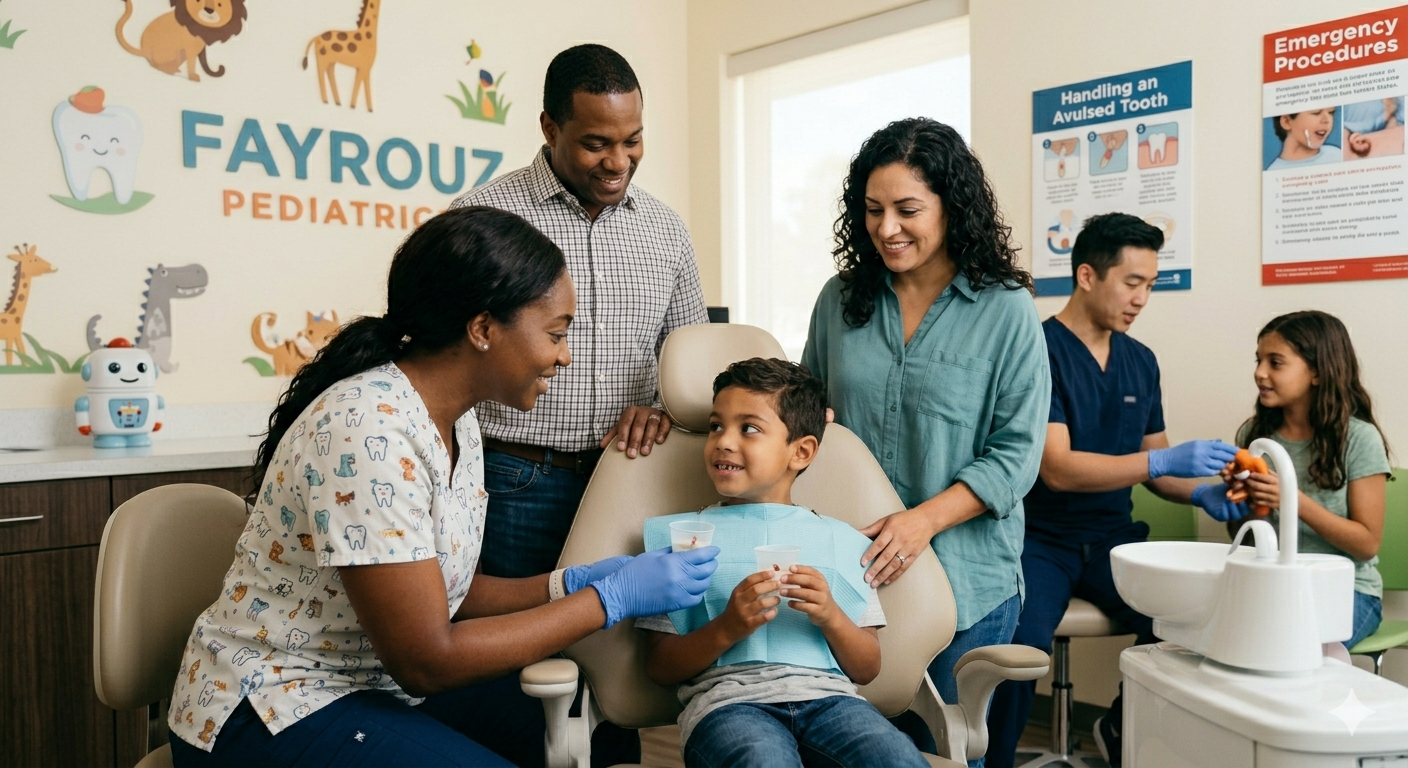
A knocked-out tooth is one of the most alarming dental emergencies a parent can face. Whether your child is a curious toddler, an energetic school-age kid, or a teenager involved in sports, dental injuries can happen in an instant. Knowing exactly what to do in those critical first minutes can mean the difference between saving and losing a tooth permanently. This guide is designed for multilingual and multicultural families across the United States who want clear, actionable, and medically sound information when every second counts.
Dental emergencies do not always happen during office hours. Whether you are at a playground, at a soccer game, or right at home, this article will walk you through every step — from the moment a tooth gets knocked out to when you should seek professional care. If you ever need a trusted provider, consider reaching out to Fayrouz Pediatrics, where compassionate and multilingual pediatric care is always available.
How Does a Knocked-Out Tooth Reattach?
When a knocked-out tooth is a permanent adult tooth, reattachment is biologically possible if certain conditions are met quickly. The tooth’s root is surrounded by a thin layer of cells called the periodontal ligament. These living cells are responsible for anchoring the tooth to the jawbone. When a tooth is avulsed — meaning completely displaced from its socket — these cells begin to dry out and die within 15 to 30 minutes if the tooth is not kept moist.
For reattachment to succeed, the periodontal ligament cells must still be alive when the dentist replants the tooth. This is why time is the most critical factor. Once the tooth is repositioned in the socket, the bone slowly reintegrates around the root in a process similar to how a broken bone heals. However, this only works reliably with permanent teeth. Baby teeth are intentionally not replanted because doing so can damage the underlying permanent tooth bud.
The ideal storage medium for a knocked-out tooth while transporting to the dentist is a solution known as Hank’s Balanced Salt Solution (HBSS), which is sold in some pharmacies as “Save-A-Tooth.” However, most households do not keep this on hand. The next best options, in order of preference, are cold milk, the child’s own saliva (by placing the tooth inside the cheek), or sterile saline. Tap water is a last resort, as it can damage the root cells due to its mineral content and osmotic pressure.
Steps to Take If Your Child Loses a Baby Tooth from Injury
When a baby tooth (primary tooth) gets knocked out due to an accident, parents are often unsure whether to act the same way as they would with a permanent tooth. The answer is: no — baby teeth are handled differently. Here is what to do:
- Stay calm and reassure your child. Children mirror adult anxiety. A calm, controlled response will help your child feel safer and make it easier to assess the situation.
- Control the bleeding. Use a clean cloth or gauze and gently apply pressure to the area. Bleeding from a baby tooth socket is typically manageable and slows within a few minutes.
- Do NOT replant the baby tooth. Unlike permanent teeth, baby teeth should never be put back into the socket. Doing so risks damaging the permanent tooth that is forming below the gum.
- Save the tooth if you can find it. Bring it to the dentist so they can confirm it is fully intact — or rule out that a piece has been pushed into the gum.
- Schedule a dental visit promptly. Even if there is no visible injury, a pediatric dentist should examine the area to check for damage to the gum, bone, or the developing permanent tooth beneath.
Toddlers and infants are especially prone to falls. If your newborn or infant has an oral injury involving a tooth — even a newly erupted one — contact your provider right away. While a knocked-out tooth may not seem serious in a baby, the impact can affect the growth path of the permanent tooth for years to come.
How to Respond to a Knocked-Out Adult Tooth
When a permanent tooth gets knocked out, this is a true dental emergency. Acting within 30 to 60 minutes gives the tooth the best chance of survival. Follow these steps:
- Find the tooth immediately. Pick it up by the crown (the white part you chew with). Never touch the root — the oils and bacteria on your fingers can kill the delicate root cells.
- Rinse gently if dirty. If the tooth is visibly contaminated with dirt, rinse it very briefly under cold running water for no more than 10 seconds. Do not scrub it, soak it, or use soap.
- Try to reinsert the tooth. If possible and the child is old enough to cooperate, gently push the tooth back into its socket in the correct orientation. Have your child bite softly on a cloth to hold it in place.
- Store in milk if reinsertion is not possible. Place the knocked-out tooth in milk — specifically cold whole milk — to preserve the root cells during transport. This is one of the most accessible and effective storage solutions available in most homes.
- Get to a dentist immediately. Call ahead so the office can prepare. If your regular dentist is unavailable, head to an emergency pediatric dental clinic without delay.
For parents of school-age children and teenagers who play sports, consider purchasing a dental first aid kit that includes HBSS solution. Coaching staff and school nurses should also be educated about proper handling of a knocked-out tooth, as prompt action in those settings can save a tooth before a parent even arrives.
Benefits of Seeing a Pediatric Dentist for Your Child
Not all dentists are equally equipped to handle dental trauma in children. A pediatric dentist treatment specialist has completed two to three years of additional training beyond dental school — specifically focused on the oral health needs of infants, children, and teenagers. They understand child psychology, growth patterns, and the anatomical differences between developing and adult dentition.
Here are the key advantages of choosing a pediatric dentist for trauma care:
- Child-friendly environment: Pediatric dental offices are designed to reduce fear and anxiety. The equipment is scaled for smaller mouths and the staff are trained in calming distressed children.
- Expertise in dental trauma: Pediatric dentists see a significantly higher volume of knocked-out teeth, fractured teeth, and displaced teeth than general dentists. This experience translates to faster, more confident decision-making.
- Long-term monitoring: After a tooth is replanted or a trauma incident occurs, the dentist will schedule regular follow-up visits to monitor the tooth’s vitality, root resorption, and bone healing.
- Multilingual and multicultural sensitivity: Many pediatric practices, including Fayrouz Pediatrics, serve multilingual families and understand how to communicate care instructions clearly across language barriers.
- Sick visit availability: Families who need quick sick visits for dental emergencies benefit from pediatric practices that offer same-day or next-day urgent appointments, minimizing the window between injury and treatment.
Simple Steps to Reduce the Risk of Dental Injuries
While it is impossible to prevent every accident, many dental injuries — including a knocked-out tooth — are preventable with the right precautions. Here are evidence-based strategies for families:
- Mouthguards for sports: Any child who plays contact or recreational sports — including basketball, soccer, gymnastics, and cycling — should wear a properly fitted mouthguard. Custom-fitted mouthguards from a dentist offer the best protection.
- Childproof your home: For parents of newborns and infants who are beginning to walk, padding sharp corners on furniture and ensuring safe play areas can significantly reduce fall-related oral injuries.
- Helmet use: Helmets protect the head and face during biking, skateboarding, and other wheeled sports. Full-face helmets offer additional protection for the teeth and jaw.
- Educate your child: Teach children — especially school-age children and teenagers — not to use their teeth as tools. Opening packages, chewing on pens, or biting nails can all weaken teeth and make them more susceptible to injury.
- Regular dental checkups: A dentist who monitors your child’s oral development over time can identify structural vulnerabilities — such as protrusive front teeth — and recommend preventive interventions before an injury occurs.
What You Should Know About an Avulsed Tooth
In dental terminology, a knocked-out tooth is medically referred to as an “avulsed tooth.” This term is used specifically when a tooth has been entirely removed from its socket due to trauma — as opposed to a tooth that is chipped, cracked, or loosened but still partially attached. Avulsion is considered one of the most severe forms of dental trauma because the entire support structure is disrupted.
The prognosis for an avulsed permanent tooth depends heavily on three factors: the length of time the tooth was outside the mouth, how the tooth was stored during that time, and the child’s age and dental development stage. Younger children with more open root apices (the tip of the root) may actually have a better chance of pulp revascularization — meaning the tooth’s internal blood supply can regenerate — compared to older children with fully formed roots.
When the avulsed permanent tooth cannot be saved long-term, the dentist will discuss replacement options with the family. These may include a dental implant (once the jaw has finished growing), a fixed dental bridge, or a removable partial denture as a temporary solution. Early intervention and proper knocked-out tooth treatment gives children the best possible foundation for long-term oral health.
FAQ: Common Questions About Knocked-Out Teeth in Children
If a Permanent Tooth Falls Out, Will It Grow Back?
No. Unlike baby teeth, permanent teeth do not regrow once lost. The human body produces two sets of teeth in a lifetime: primary (baby) teeth and permanent (adult) teeth. Once the permanent tooth is gone, there is no natural third set waiting to emerge. This is why treating a knocked-out tooth as an emergency is so important — the permanent tooth must either be reattached or replaced with a prosthetic solution. Parents often ask this question out of hope, especially when the child is still young. While it is a natural and completely understandable question, the answer is that professional dental intervention is the only path to restoring the smile.
What Causes Avulsed Teeth?
Avulsed teeth are almost always the result of sudden, direct impact to the mouth or jaw. The most common causes include:
- Falls: The leading cause of tooth avulsion in toddlers and young children. A fall from a bed, high chair, or play equipment can easily result in a knocked-out tooth.
- Sports injuries: Contact sports such as football, hockey, and wrestling account for a significant portion of avulsion cases in school-age children and teenagers.
- Car accidents: Even low-speed vehicle collisions can cause facial trauma severe enough to dislodge teeth.
- Physical altercations: Blunt force from a punch or hit can cause avulsion, particularly in adolescents and teens.
- Biting on hard objects: Chewing on ice, hard candy, or non-food items can create enough pressure to dislodge a structurally compromised tooth.
How Do Dentists Treat an Avulsed Tooth?
The approach to knocked-out tooth treatment for a permanent tooth involves several steps. First, the dentist evaluates the socket and the tooth, cleaning both carefully to remove debris. The tooth is then repositioned in the socket and stabilized with a flexible splint that is bonded to the neighboring teeth. This splint is typically worn for one to two weeks, allowing the periodontal fibers to begin reattaching.
Root canal therapy is usually required shortly after replantation — often within one to two weeks — to remove the tooth’s pulp and prevent infection. The tooth’s long-term survival depends on how well the root integrates with the surrounding bone. The dentist will take X-rays at regular intervals to monitor for complications such as root resorption (where the body begins to break down the root) or ankylosis (where the tooth fuses rigidly to the bone).
For families seeking comprehensive pediatric dentist treatment, Fayrouz Pediatrics provides thorough dental trauma care with attention to each child’s unique developmental needs.
Should an Avulsed Baby Tooth Be Replanted?
No. The consensus among pediatric dental associations is that avulsed primary teeth should not be replanted. The primary reason is the risk of damaging the permanent tooth bud that sits beneath the baby tooth. Forcing a displaced primary tooth back into the socket can push bone fragments into the developing tooth or create an infection that affects permanent tooth formation. Instead, the dentist will monitor the area and, if needed, use a space maintainer to prevent neighboring teeth from drifting into the gap before the permanent tooth erupts.
Parents should not feel guilty about not replanting the baby tooth — it is the correct medical decision. The focus after losing a primary tooth to injury should be on keeping the child comfortable, ensuring the gum heals cleanly, and scheduling a follow-up visit to assess the underlying permanent tooth.
Quick Reference: What to Do When a Tooth Is Knocked Out
Here is a concise summary for parents to keep in mind — or even print out and post on the refrigerator:
- Is it a baby tooth? Do not replant. Control bleeding, save the tooth in a clean bag, and see a dentist within 24 hours.
- Is it a permanent tooth? Act immediately. Handle by the crown only, rinse if dirty, attempt reinsertion or store knocked-out tooth in milk, and go to the dentist within 30 minutes.
- Time is critical. Every minute the tooth is outside the mouth reduces the chance of successful reattachment.
- Never use tap water, alcohol, or soap to clean or store a knocked-out tooth.
- Always follow up with a pediatric dentist treatment specialist for ongoing monitoring after any dental trauma.
Dental injuries are frightening, but being prepared makes all the difference. Whether you are a parent of a newborn, a school-age child, or a teenager, understanding how to respond to a knocked-out tooth can protect your child’s smile for life. Multilingual and multicultural families across the United States can count on dedicated pediatric practices to provide clear, respectful, and effective care. When a dental emergency strikes, do not wait — call Fayrouz Pediatrics and get your child the help they need right away.
