


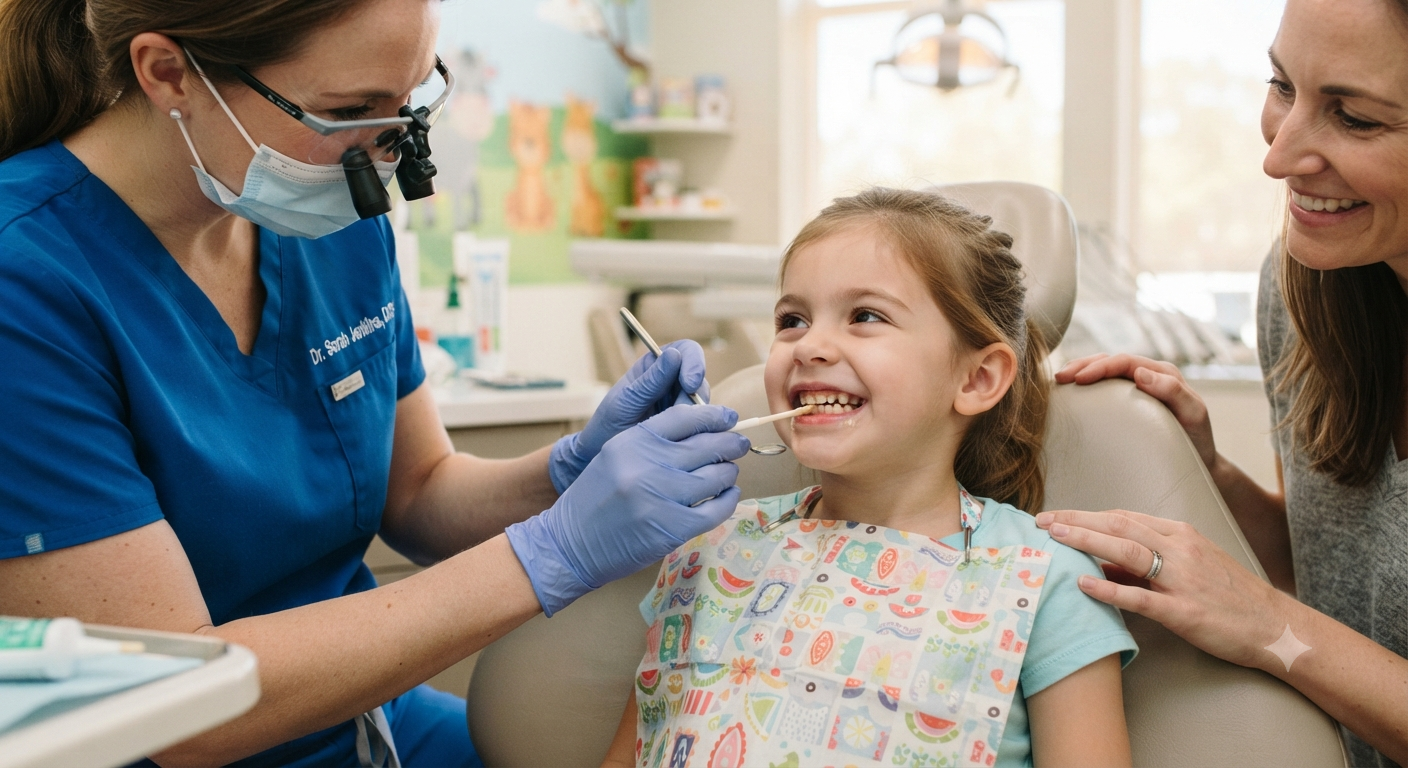
Few topics in pediatric oral health generate as many questions — and as much conflicting information online — as children’s fluoride treatment. Is it safe? Is it necessary? Does it matter at home versus in the dental office? What is the right amount for a toddler versus a school-age child? Parents who ask these questions deserve clear, evidence-based answers, not marketing copy or unfounded alarm. This guide provides exactly that: a complete, honest overview of what children’s fluoride treatment is, how it works, what the science actually says about its safety and effectiveness, and how to use it appropriately at every stage of your child’s development.
What Is Children’s Fluoride Treatment and How Does It Work?
Children’s fluoride treatment refers to the deliberate application of fluoride — a naturally occurring mineral — to a child’s teeth for the purpose of strengthening enamel and reducing the risk of tooth decay. Fluoride works through two primary mechanisms: topically, by incorporating into the surface layer of enamel and making it more resistant to acid dissolution; and systemically, during tooth development, by being incorporated into the mineral structure of teeth as they form, producing enamel that is intrinsically harder and more acid-resistant than it would otherwise be.
At the molecular level, children’s fluoride treatment works by converting hydroxyapatite — the natural mineral of tooth enamel — into fluorapatite, a harder, less soluble crystal that is significantly more resistant to the acid attacks that cause decay. This transformation happens both during tooth development (systemic fluoride exposure) and repeatedly throughout life at the enamel surface (topical fluoride exposure). It is this dual mechanism that makes children’s fluoride treatment one of the most effective preventive tools available in dentistry.
Types of Children’s Fluoride Treatment: Home and Professional
Children’s fluoride treatment is delivered through multiple channels, each playing a distinct role in a comprehensive approach to decay prevention.
Fluoridated Drinking Water
Community water fluoridation — the adjustment of fluoride levels in public water supplies to a concentration proven to reduce decay — is the most far-reaching and equitable form of children’s fluoride treatment available. It requires no action from families, works passively throughout the day as children drink water, and has been endorsed by the American Dental Association, the American Academy of Pediatrics, and the World Health Organization as one of the ten great public health achievements of the twentieth century. Children who grow up drinking fluoridated water have measurably lower rates of tooth decay than those who do not.
Fluoride Toothpaste
Twice-daily brushing with fluoride toothpaste is the most important home-based children’s fluoride treatment for every child from the first tooth onward. The recommended amount is a grain-of-rice-sized smear for children under three and a pea-sized amount for children three to six. After brushing, children should spit and not rinse, leaving a thin residual film of fluoride on the tooth surfaces that continues to remineralize enamel after brushing ends.
Professional Fluoride Varnish
Fluoride varnish is a professionally applied children’s fluoride treatment in which a concentrated fluoride-containing resin is painted directly onto the tooth surfaces at a dental visit. It adheres to the teeth for hours, allowing sustained fluoride uptake into the enamel, and has the strongest evidence base of any professional fluoride product for preventing decay in children. It is recommended every three to six months for most children, with more frequent applications for those at higher decay risk. Fluoride varnish application takes only minutes, is well tolerated by children of all ages including infants, and is considered safe and highly effective at every recommended dose.
Prescription Fluoride Supplements and Rinses
For children who live in areas with non-fluoridated water and are at elevated decay risk, prescription fluoride supplements — available as drops, tablets, or lozenges — provide systemic children’s fluoride treatment during the tooth development years. Fluoride rinses, available both over-the-counter and by prescription, provide additional topical children’s fluoride treatment and are typically recommended for children over six who can reliably spit without swallowing.
Is Children’s Fluoride Treatment Safe? Addressing Common Concerns
Despite an overwhelming scientific consensus supporting the safety of appropriately dosed children’s fluoride treatment, misinformation about fluoride risks circulates widely online. Addressing the most common concerns directly with accurate information helps parents make decisions based on evidence rather than fear.
Fluorosis: What It Is and When It Matters
Dental fluorosis is a cosmetic condition that can occur when children consume excessive fluoride during the period when their teeth are forming, typically from birth through age eight. Mild fluorosis appears as faint white streaks on the enamel that are generally not noticeable to anyone but a dental provider. Moderate to severe fluorosis — which produces pitting or brown staining — is rare in children who receive children’s fluoride treatment at recommended doses and is primarily associated with ingesting large amounts of fluoride from multiple overlapping sources without professional guidance. The tiny amounts of fluoride toothpaste recommended for infants and toddlers are specifically calibrated to deliver protective benefit without fluorosis risk.
Systemic Safety of Children’s Fluoride Treatment
At concentrations used in water fluoridation, toothpaste, and professional varnish, fluoride is safe for children. Decades of research in populations around the world have consistently found no credible evidence of adverse health effects from children’s fluoride treatment at recommended exposure levels. The dose used in fluoride varnish applied at a dental visit contains less total fluoride than is present in many foods and has a long, well-documented safety record in pediatric dental practice. Parents who have concerns about children’s fluoride treatment should discuss them directly with their child’s pediatric provider, who can provide personalized guidance based on the child’s age, risk level, and water source.
Children’s Fluoride Treatment by Age: A Practical Guide
The appropriate type and amount of children’s fluoride treatment changes as a child grows. Here is a practical, age-specific overview.
- Birth to 6 months: No fluoride toothpaste yet. If the family uses formula, mixing with fluoridated tap water provides appropriate systemic fluoride. Gum wiping after feeds begins oral hygiene.
- 6 months to 3 years: Grain-of-rice smear of fluoride toothpaste from the first tooth. Fluoride varnish begins at the first dental visit. Fluoridated water as the primary drink from 6 months.
- 3 to 6 years: Pea-sized amount of fluoride toothpaste. Professional fluoride varnish every 3–6 months. Child should spit after brushing but rinsing is not yet necessary.
- 6 years and older: Pea-sized fluoride toothpaste, spitting after brushing. Fluoride varnish at dental visits. Fluoride rinse may be added for higher-risk children. Dental sealants complement children’s fluoride treatment for molar protection.
When Children’s Fluoride Treatment Is Most Critical
While children’s fluoride treatment is beneficial throughout childhood and beyond, certain periods and circumstances make it especially important. Children at elevated decay risk —ightly those with a history of previous cavities, poor diet quality, inadequate oral hygiene, special healthcare needs, or limited access to fluoridated water — benefit most from consistent, professionally supervised children’s fluoride treatment. The window from birth through age eight, when both primary and permanent teeth are forming and erupting, is the period of greatest systemic fluoride impact. And the immediate post-eruption period for each tooth — when enamel is still maturing — is when topical children’s fluoride treatment is most efficiently incorporated and most protective.
Our team at Fayrouz Pediatrics provides professional children’s fluoride treatment as part of every preventive dental visit and tailors fluoride recommendations to each child’s individual risk profile. Visit our pediatric dentist treatment page for more information.
Frequently Asked Questions About Children’s Fluoride Treatment
Is fluoride toothpaste safe for a one-year-old?
Yes. The American Academy of Pediatric Dentistry and the American Academy of Pediatrics both recommend starting children’s fluoride treatment with fluoride toothpaste from the moment the first tooth erupts, which typically occurs around six months. The recommended amount for children under three is a grain-of-rice-sized smear — approximately 0.1 grams — which delivers protective fluoride to the erupting teeth while remaining safe even if swallowed. This tiny amount is calibrated specifically to provide the benefits of children’s fluoride treatment without meaningful fluorosis risk.
How often should my child receive professional fluoride varnish?
The standard recommendation for professional children’s fluoride treatment with fluoride varnish is every six months for children at average decay risk, coinciding with their regular preventive dental visits. Children at elevated risk — those with previous cavities, significant sugar exposure, inadequate oral hygiene, or other risk factors — may benefit from varnish applications every three months. The frequency is determined by the provider based on a clinical risk assessment at each visit. There is no benefit to applying fluoride varnish more frequently than every three months in most clinical situations.
My child drinks filtered water — do they need fluoride supplements?
It depends on the type of filtration. Standard carbon-based filters (like those in pitcher filters or refrigerator filters) do not remove fluoride from tap water, so a child drinking filtered tap water in a fluoridated community is still receiving the benefits of children’s fluoride treatment through water. Reverse osmosis systems and certain specialty filters do remove fluoride, meaning children who drink primarily reverse-osmosis-filtered water may be missing this source. Bottled water typically contains negligible fluoride. If your child primarily drinks filtered or bottled water, discuss fluoride supplementation options with your pediatric provider to ensure their children’s fluoride treatment is adequate.
Can children’s fluoride treatment replace brushing and diet management?
No. Children’s fluoride treatment is a powerful protective tool but it is not a substitute for the other pillars of pediatric oral health. A child who receives regular fluoride varnish but consumes a high-sugar diet, brushes infrequently, and avoids professional cleanings is still at significant decay risk. Children’s fluoride treatment works most effectively as one component of a comprehensive approach that includes twice-daily brushing with fluoride toothpaste, limiting sugar and acidic food and drink exposure, regular professional cleanings and exams, and early management of any developing problems. Think of fluoride as a shield that makes the teeth more resistant to attack — but a shield that works best when the attacks themselves are also being minimized.
Children’s fluoride treatment is one of the most evidence-supported, cost-effective, and accessible tools available for protecting your child’s teeth from their very first day through adolescence. Used correctly and consistently — at home and with professional support — it gives children’s developing teeth the strongest possible defense against one of the most common chronic diseases of childhood.
Clinically reviewed by the pediatric care team at Fayrouz Pediatrics — delivering science-based children’s fluoride treatment and preventive care to families across the United States.
