


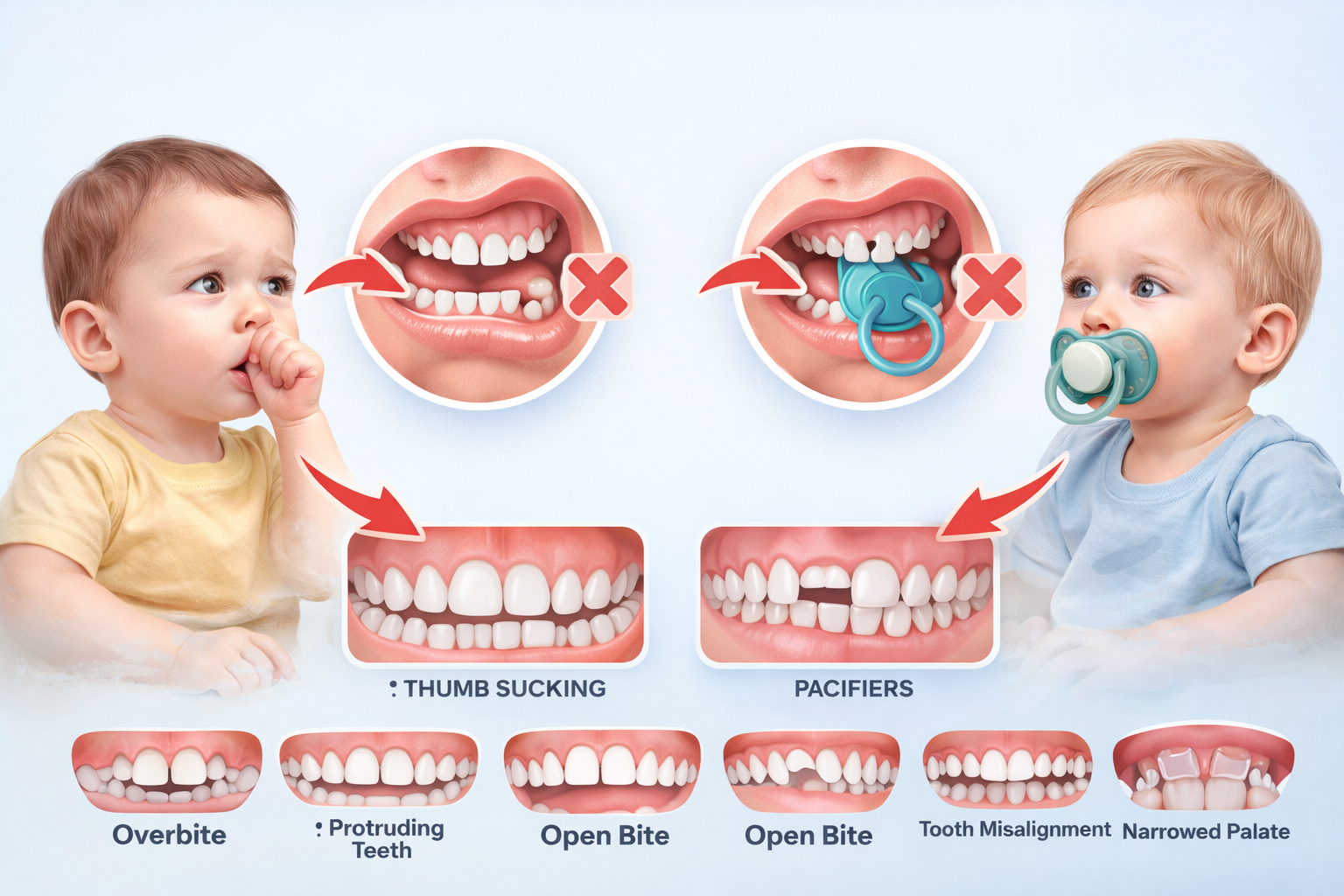
As parents, we instinctively comfort our children however we can. For millions of babies and toddlers, thumb sucking and pacifier use offer that soothing relief they naturally crave. While these habits are completely normal in early childhood, many parents are left wondering: when does comfort cross into concern? Understanding how these behaviors influence your child’s dental development is one of the most important steps you can take toward protecting your little one’s long-term oral health. This guide is designed for every family — whether you are a new parent watching your newborn discover their thumb, a parent of a school-age child trying to break a persistent habit, or a parent of a teenager managing the downstream effects of early childhood behaviors. No matter your background, language, or culture, your child’s smile matters, and knowledge is the first step to protecting it.
Understanding Why Children Use Thumb Sucking and Pacifiers
From the moment a baby enters the world, sucking is one of their most fundamental reflexes. This non-nutritive sucking — meaning sucking that is not related to feeding — is hardwired into infants as a self-regulation mechanism. It lowers heart rate, reduces stress hormones, and helps babies fall asleep. Thumb sucking and pacifier use are simply extensions of this biological drive.
For newborns and infants, this reflex is considered not only normal but healthy. The American Academy of Pediatrics recognizes pacifier use in infants as a protective factor against sudden infant death syndrome (SIDS), particularly when introduced after breastfeeding is well established. This means that early pacifier use carries real benefits — making it more complicated than simply a habit to eliminate.
The concern around these habits emerges later, typically after age three or four, when children’s oral structures are actively shaping themselves around repeated pressures. This is where dental development becomes a central topic for pediatric health providers across the United States.
Why Kids Develop Thumb Sucking and Pacifier Habits
Children are not randomly choosing these behaviors. There are well-documented psychological and physiological reasons behind why these habits form and, more importantly, why they persist. Understanding the root cause helps parents respond with empathy rather than frustration.
- Anxiety and stress: Major transitions such as starting daycare, the birth of a sibling, moving homes, or changes in family structure can trigger or intensify sucking behaviors in toddlers and young children.
- Boredom and habit: Some children suck their thumbs or use pacifiers simply out of habit, especially during downtime or screen time, making them less aware of the behavior.
- Sleep association: Many children link these behaviors with falling asleep, making it harder to eliminate the habit at bedtime even when the child is otherwise ready.
- Cultural norms: In some cultures and families, extended pacifier use is normalized and even encouraged. For multicultural families, this can create conflicting advice between different generations or between home culture and American pediatric guidelines.
Knowing the reason behind the habit is the first step. The next is understanding how prolonged use interacts with the ongoing process of dental development in your child.
Knowing When to Take Action
Timing is everything when it comes to oral habits and dental development. Most pediatric dental experts agree that thumb sucking and pacifier use become a concern primarily when the habit continues beyond age three and certainly by the time permanent teeth start erupting, typically between ages five and seven.
Here is a general framework pediatric providers often use:
- Under age 2: Non-nutritive sucking is developmentally appropriate and generally no intervention is needed. Focus on nutrition, bonding, and sleep health.
- Ages 2–3: Begin gentle, positive conversations about reducing the habit. Introduce alternatives like comfort objects, deep breathing, or cuddle time.
- Ages 4–5: If the habit persists, it is strongly recommended to consult with a pediatric provider. The impact on dental development becomes clinically significant during this window.
- Ages 6 and beyond: Intervention is typically necessary at this stage. Depending on the degree of impact, orthodontic assessment may be recommended.
For parents of school-age children and teens dealing with the lasting consequences of these early habits, it is never too late to seek professional guidance. Dental development is an ongoing process, and timely intervention can make a significant difference in outcomes.
How These Habits Shape Dental Development in Children
To understand the impact of thumb sucking and pacifier use, it helps to know what normal dental development looks like. The human mouth goes through a structured sequence of changes from infancy through early adulthood, and disrupting this process can have cascading effects.
The 6 Stages of Tooth Development
A dental development chart typically illustrates six recognized stages of tooth formation and eruption:
- Initiation (6–7 weeks in utero): The dental lamina forms as a ribbon of tissue along the future jaw ridges, giving rise to both primary and permanent teeth.
- Proliferation (8–12 weeks in utero): Rapid cell growth leads to the formation of tooth buds, each destined to become a specific tooth in the mouth.
- Histodifferentiation: Specialized cells begin to differentiate into enamel-producing ameloblasts and dentin-producing odontoblasts.
- Morphodifferentiation: The future shape of each tooth crown is determined at this stage.
- Apposition: Hard tissues (enamel and dentin) are actually deposited layer by layer.
- Calcification and eruption: Teeth mineralize and eventually push through the gum tissue, beginning around 6 months after birth for primary teeth and again around age 6 for permanent teeth.
Prolonged thumb sucking or pacifier use applies repeated mechanical pressure against the teeth and jaw during the most active phases of eruption and positioning. This pressure — when it occurs consistently for months or years — reshapes the dental arches in ways that may require significant corrective treatment later in life.
Dental Development in Children: What the Research Shows
Studies on dental development in children consistently show that the duration, frequency, and intensity of sucking behaviors all factor into how much structural change occurs. A child who sucks passively at night may experience fewer consequences than one who vigorously sucks throughout the day. Similarly, a child who stops the habit by age three may see their bite self-correct naturally, while one who continues past age five may need orthodontic intervention.
Dental development is not a single event but a lifelong progression. This is why ongoing monitoring by a qualified pediatric provider is so important, especially for families navigating these habits.
Oral Health Issues Caused by Prolonged Thumb Sucking and Pacifier Use
When sucking habits persist past the critical window in dental development, several distinct oral health conditions can emerge. These range from minor cosmetic concerns to more complex structural issues requiring professional treatment.
Open Bite
An open bite occurs when the upper and lower front teeth do not make contact when the back teeth are closed together. This is one of the most commonly recognized signs that a sucking habit has affected dental development. Open bites can affect speech, chewing, and the ability to bite into foods, and they are notoriously difficult to correct without orthodontic intervention once the permanent teeth have fully erupted.
Overjet (Protruding Upper Teeth)
Overjet refers to the horizontal projection of the upper teeth beyond the lower teeth. Thumb sucking in particular encourages the upper front teeth to tip outward and the lower teeth to tip inward, creating an exaggerated horizontal gap. This condition is sometimes called “buck teeth” and is closely tied to the mechanical pressure thumb sucking exerts on the dental development process.
Narrowing of the Palate
The suction created during thumb sucking in particular can pull the upper arch inward, narrowing the palate over time. A narrowed palate creates crowding, affects nasal breathing, and can lead to crossbite conditions where the upper teeth sit inside the lower teeth. This structural change is a direct consequence of altered dental development pressure mechanics.
Speech Complications
Dental development changes caused by sucking habits can also affect speech. Children with open bites may develop lisps or have difficulty producing certain sounds like “s,” “z,” “t,” and “d.” For multilingual families, where children are learning to articulate sounds across multiple languages, these speech complications can be especially frustrating and impactful.
Practical Steps to Minimize Dental Issues from Thumb Sucking and Pacifiers
Whether your child is still in the habit or you are managing the aftermath, there are practical, evidence-based steps that can help protect and restore healthy dental development.
Use Positive Reinforcement, Not Shame
Research consistently shows that children respond better to positive reinforcement than punishment or shame. Celebrate thumb-free days with sticker charts, small rewards, or special activities. For toddlers and preschoolers especially, this approach aligns with healthy emotional development alongside dental development.
Identify and Address Triggers
Keep a brief journal of when your child sucks their thumb. Is it when they are tired? Anxious? Watching TV? Identifying triggers lets you substitute more appropriate coping strategies. This might mean offering a special stuffed animal at bedtime, practicing deep breathing for anxious moments, or simply keeping little hands busy during screen time.
For Pacifier Users: Gradual Weaning Works Best
Cold turkey approaches can backfire, especially for younger children who have strong emotional associations with their pacifiers. Instead, try a gradual schedule: restrict use to sleep times only, then gradually reduce from there. Some families also use the “pacifier fairy” concept, where the child willingly gives their pacifiers away in exchange for a gift, framing it as a rite of passage.
Work With a Pediatric Provider
Families navigating these challenges should not have to go it alone. A trusted
Working with a pediatric dentist treatment specialist means having a knowledgeable partner who can monitor dental development over time, provide early intervention, and create a personalized plan for your child. Pediatric providers are specifically trained to work with children of all ages and backgrounds, including multilingual and multicultural families who may have additional communication needs.
At
At Fayrouz Pediatrics, our team understands that every child and every family is different. We offer guidance that is compassionate, culturally sensitive, and rooted in the latest evidence on dental development in children.
Consider Dental Appliances When Needed
In cases where the habit has persisted long enough to affect dental development structurally, a fixed or removable appliance may be recommended. A palatal crib or habit reminder appliance is placed in the mouth by a dental provider and acts as a gentle physical reminder that discourages thumb sucking without being painful or punitive. These appliances have a strong track record and are typically used in older children for whom behavioral approaches alone have not been sufficient.
Our Focus on Your Child’s Dental Wellbeing
At Fayrouz Pediatrics, we believe that protecting your child’s dental development is a team effort. Our providers specialize in working with newborns, infants, school-age children, adolescents, and teens, offering services that span the full spectrum of pediatric oral health needs. We also recognize that our patient families come from a wide range of cultural, linguistic, and socioeconomic backgrounds, and we are committed to making every interaction welcoming, informative, and free of judgment.
Whether your child needs a quick sick visit where dental concerns are identified incidentally, or a dedicated evaluation of habits affecting dental development, we are here to help. We do not wait until a problem becomes severe. Early conversations about dental development, even during well-child visits, can prevent costly and stressful interventions down the road.
Our approach is grounded in three core values: education, empathy, and evidence. We explain what is happening with your child’s dental development in plain language, we treat every family with warmth and respect, and every recommendation we make is backed by current pediatric health research.
To learn more about how we support children’s oral health, visit our pediatric dentist treatment page or explore our full range of services at Fayrouz Pediatrics.
Frequently Asked Questions About Dental Development
What are the stages of dental development?
Dental development unfolds across six primary stages that begin even before birth. The process starts in the embryonic period with initiation, when the dental lamina first forms, and progresses through proliferation, histodifferentiation, morphodifferentiation, apposition, and finally calcification and eruption. For children, the visible milestones are the eruption of primary (baby) teeth beginning around six months of age and the transition to permanent teeth beginning around age six. A standard dental development chart used by pediatric providers maps out the expected eruption sequence for all 20 primary and 32 permanent teeth, helping providers identify delays or abnormalities early. Understanding the 6 stages of tooth development gives parents a framework for knowing what to expect and when to seek guidance.
What is the 3-3-3 rule for teeth?
The 3-3-3 rule is a helpful memory tool for parents tracking dental development in children during the primary (baby) tooth phase. It refers to the general pattern of first molars appearing in groups of three from three different ages, roughly: three teeth erupt every three months starting around three months of age. While this is a simplified guideline rather than a strict medical rule, it helps parents understand that tooth eruption happens in a relatively predictable pattern and that some spacing between eruptions is completely normal. If you notice significant delays or your child seems distressed during eruption, it is always worth mentioning to your child’s provider during their next visit.
What is the definition of dental development?
Dental development refers to the complete biological process through which teeth form, mature, and emerge into the oral cavity. It encompasses everything from the earliest embryonic formation of tooth buds to the final eruption of wisdom teeth in late adolescence or early adulthood. More broadly, dental development also includes the structural and functional growth of the jaw, palate, and surrounding tissues that support the teeth. Factors that can influence dental development include genetics, nutrition, oral habits such as thumb sucking or pacifier use, injury, and systemic health conditions. A thorough understanding of dental development in children is essential for pediatric providers because it informs when to intervene, what treatments are appropriate, and how to educate families about prevention.
What mineral rebuilds your teeth?
Calcium and phosphate are the primary minerals involved in building and maintaining tooth structure, but the mineral most associated with tooth repair and remineralization is fluoride, specifically in the form of fluorapatite. When teeth are exposed to acids from food and bacteria, they lose minerals in a process called demineralization. Fluoride accelerates the incorporation of calcium and phosphate back into the enamel, forming a harder, more acid-resistant crystal structure. For children, adequate fluoride exposure through drinking water, toothpaste, and professional treatments supports healthy dental development throughout the primary and permanent tooth phases. Parents should discuss fluoride recommendations with their child’s provider based on the child’s age, diet, and local water fluoridation levels.
Your child’s dental development is a lifelong journey that begins before birth and continues into early adulthood. The habits formed in the earliest years — including thumb sucking and pacifier use — are a natural part of childhood, but they require attention as your child grows. By staying informed, acting early, and partnering with a knowledgeable pediatric provider, you can help set the foundation for a healthy, confident smile that will serve your child for the rest of their life.
Reviewed and published by the clinical team at Fayrouz Pediatrics — dedicated to evidence-based pediatric care for families across the United States.
