


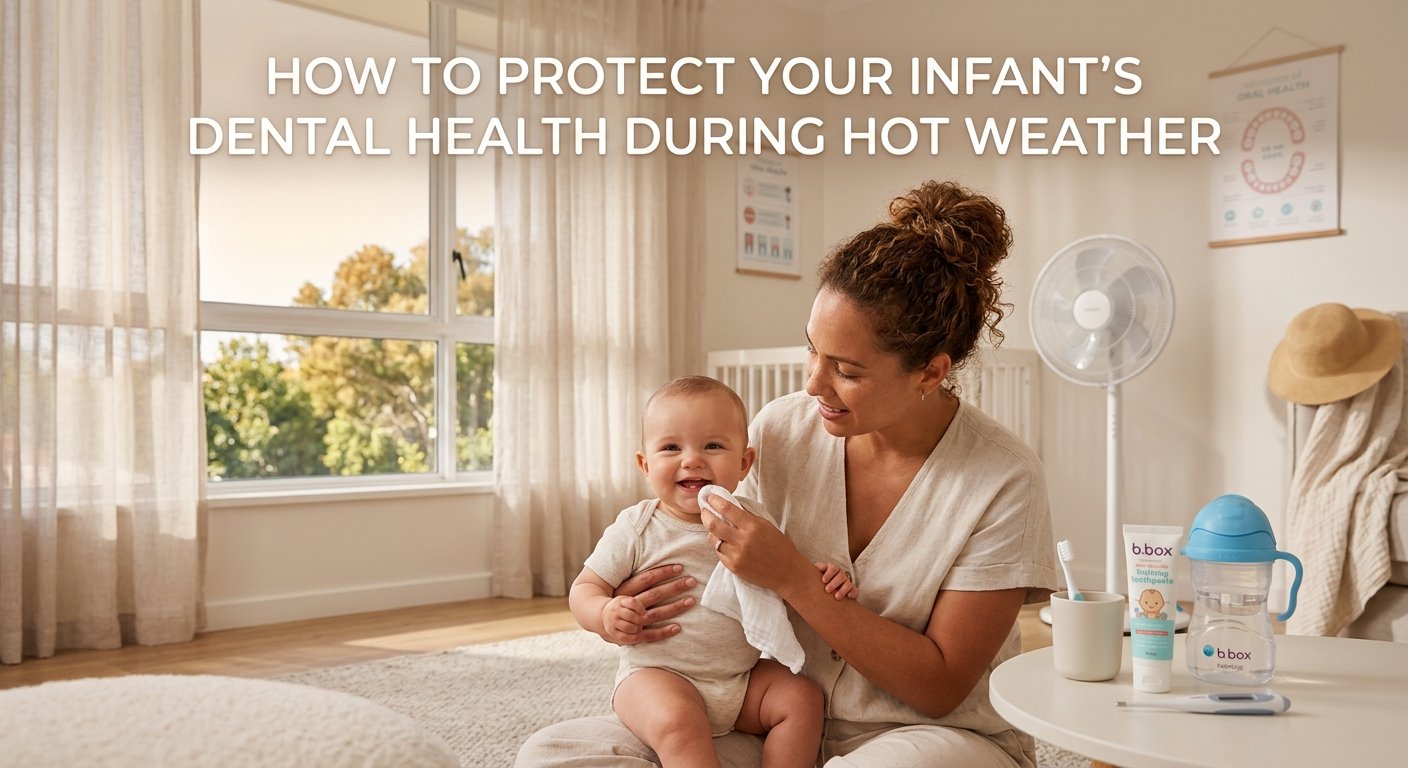
Summer brings longer days, family outings, and the kind of heat that changes everything about how you care for your baby. As a parent, you are likely already thinking about sunscreen, hydration, and keeping your little one cool. But there is one aspect of infant care that tends to get overlooked when temperatures climb: your infant’s dental health. The connection between hot weather and your baby’s developing teeth and gums is real, and understanding it gives you a meaningful advantage in protecting a smile that is just beginning to take shape.
Whether your baby has just cut their first tooth or is still months away from that milestone, summer is a season that introduces specific risks to infant dental health — from dehydration reducing the protective saliva in your baby’s mouth, to sugary cooling snacks and drinks that create an environment where cavity-causing bacteria thrive. This guide walks through everything parents of newborns and infants need to know to keep their baby’s mouth healthy through the warmest months of the year.
Why Hot Weather Creates Unique Risks for Infant Dental Health
Most parents do not immediately connect the summer heat with their infant’s dental health — and that gap in awareness is precisely why summer dental problems in infants are so common and so preventable. Hot weather changes the conditions inside your baby’s mouth in ways that directly affect the health of their teeth and gums, even before those teeth are fully visible.
Dehydration and Reduced Saliva Flow
Saliva is the unsung hero of infant dental health. It neutralizes acids produced by bacteria, delivers calcium and phosphate to developing tooth surfaces, physically washes food and bacteria away from the gums and emerging teeth, and contains antimicrobial proteins that suppress bacterial growth. When an infant is even mildly dehydrated — which happens more quickly in hot weather than most parents expect — saliva production drops and all of these protective functions are diminished. The result is an oral environment that is more acidic, less self-cleaning, and more hospitable to the bacteria responsible for early childhood decay.
Increased Consumption of Sugary Cooling Foods
Hot weather naturally leads parents toward cool, sweet offerings for their babies — fruit juices, sweetened teething popsicles, flavored water, and refrigerated fruit pouches. While the intention is comfort and hydration, many of these options are high in sugar or acid, both of which are damaging to infant dental health. A baby’s enamel is thinner and more vulnerable than an adult’s, making it more susceptible to acid dissolution and bacterial attack. Frequent exposure to sweet or acidic foods and drinks during the summer months can accelerate the conditions that lead to early childhood caries, particularly if they are offered in a bottle or sippy cup that the baby sips from throughout the day.
Disrupted Routines and Oral Hygiene Gaps
Summer travel, irregular nap schedules, and the general disruption of warm-weather family life can quietly undermine the oral hygiene routines that protect infant dental health. Bedtime routines get pushed back, the gum-wiping habit gets skipped after a late outdoor dinner, and the familiar structure that helps parents stay consistent disappears. Even a few weeks of inconsistent oral hygiene during a period of increased sugary food exposure can set the stage for problems that show up months later.
Hydration Strategies That Support Your Baby’s Oral Health
Keeping your infant well hydrated during hot weather is the single most impactful thing you can do for both their general health and their infant dental health simultaneously. But not all hydration strategies are equally beneficial for the mouth, and understanding the differences helps you make the best choices for your baby.
Breast Milk and Formula: The Foundation
For infants under six months of age, breast milk or formula provides all the hydration a baby needs, even in hot weather. The American Academy of Pediatrics advises against giving water to babies under six months because their kidneys are not yet mature enough to handle it and it can displace the caloric intake they need from milk. From an infant dental health perspective, breast milk is the optimal choice — it contains growth factors, immune proteins, and minerals that support the development of the gum tissue and the early mineralization of incoming teeth. If your baby is formula-fed, mixing formula with fluoridated tap water (once the baby is of appropriate age) introduces a source of fluoride that helps strengthen developing enamel.
Introducing Water After Six Months
Once solids are introduced around six months, small amounts of water can be offered in a cup — not a bottle — to accompany meals. Fluoridated tap water is the best choice for infant dental health because it provides ongoing passive fluoride exposure that supports enamel mineralization. In the summer months, offering sips of water after meals and snacks also helps rinse residual food particles and sugars from the gum surfaces and emerging teeth, providing a simple but meaningful protective benefit.
What to Avoid for the Sake of Infant Dental Health
Several common hydration choices that parents reach for in hot weather are genuinely harmful to infant dental health and should be avoided or minimized:
- Fruit juice: Even 100 percent fruit juice is high in natural sugars and acid. The American Academy of Pediatrics recommends no juice at all for children under one year, and no more than four ounces per day for children aged one to three. Offering juice in a bottle or letting a baby sip it throughout the day is particularly damaging to infant dental health.
- Sweetened teething waters and flavored drinks: Products marketed as soothing or hydrating for babies often contain added sugars or sweeteners that create an acidic oral environment. Check ingredient labels carefully and choose plain water whenever possible.
- Honey or sugar-dipped pacifiers: A practice used in some cultural traditions to soothe fussy infants, dipping a pacifier in honey or sugar coats the baby’s gums and emerging teeth in fermentable sugar and introduces a serious infant dental health risk. Honey also poses a botulism risk for infants under one year.
- Bottle at bedtime: Allowing an infant to fall asleep with a bottle of milk, formula, or juice pools liquid around the gums and emerging teeth for hours. This is one of the most significant risk factors for early childhood tooth decay and is especially common during summer when routines are disrupted.
For families from cultural backgrounds where certain sweet or flavored drinks are traditional offerings for infants, it is worth discussing these practices openly with your pediatric provider. There are almost always culturally compatible alternatives that honor family traditions while better protecting infant dental health.
Safe Summer Foods That Support Developing Teeth and Gums
Introducing solid foods is one of the most exciting milestones of the first year, and summer often coincides with this transition for many families. The foods you choose during this period do more than nourish your baby — they directly influence the environment in which your infant’s teeth are developing and erupting. Choosing foods that support infant dental health while keeping your baby cool and comfortable in the heat is entirely achievable.
Cooling Foods That Are Gentle on Emerging Teeth
- Chilled plain yogurt: Rich in calcium and phosphorus, plain whole-milk yogurt is one of the most tooth-supportive foods available for infants. Served cold straight from the refrigerator, it is naturally soothing for teething gums. Choose unsweetened varieties without fruit flavoring added.
- Frozen breast milk or formula popsicles: Freeze breast milk or formula in small popsicle molds for a teething soother that hydrates, nourishes, and is completely safe for infant dental health. This is a far better alternative to commercial teething popsicles, which often contain sugar and artificial flavors.
- Chilled cucumber sticks or carrot sticks (for older infants): For babies who have moved beyond purees and can safely handle soft finger foods, chilled vegetable sticks provide a satisfying chewing surface for teething discomfort and introduce important minerals and fiber without sugar.
- Soft melon cubes: Watermelon and cantaloupe are high in water content, naturally cooling, and contain vitamins A and C that support gum tissue health. Served in appropriately sized pieces for the baby’s age and motor development, they are an excellent summer infant dental health food.
- Mashed avocado: Cool, creamy, and rich in healthy fats that support enamel development, avocado is one of the most nutritionally complete first foods available. It contains no added sugar, no acid, and has a texture that is gentle on tender gums.
Foods to Use Sparingly in Summer for Infant Dental Health
Certain summer foods that seem harmless or even healthy can undermine infant dental health when offered too frequently or in the wrong form:
- Dried fruit (raisins, mango strips, apricots): High in concentrated sugar and extremely sticky. Even small amounts cling to gum surfaces and emerging tooth enamel for extended periods.
- Fruit pouches and pureed fruit in packets: Convenient for travel but often high in natural sugar and consumed by repeated sipping, which prolongs acid exposure. Offer from a spoon instead.
- Commercial teething crackers and rusks: Often contain surprising amounts of added sugar. Read ingredient labels carefully and look for unsweetened options.
The guiding principle for infant dental health in summer is the same as in any other season: minimize sugar and acid exposure, maximize calcium and water intake, and keep the oral environment as clean as possible between feedings.
Daily Oral Care Routines for Infants in Every Season
Consistent daily oral care is the backbone of infant dental health, and it needs to continue — without interruption — through the summer months. The good news is that caring for an infant’s mouth is far simpler than caring for an adult’s, and building the habit early creates a foundation that pays dividends for years.
Before the First Tooth Appears
Infant dental health care begins at birth, before any teeth are visible. After every feeding — including nighttime feeds — gently wipe your baby’s gums with a clean, damp cloth or a soft silicone finger brush. This removes milk residue and bacterial biofilm from the gum surfaces where teeth will soon erupt, and it introduces your baby to the sensation of having their mouth cleaned, which makes the transition to toothbrushing significantly easier when the first tooth arrives.
When the First Tooth Erupts
The moment the first tooth appears — typically between four and eight months of age — it is time to introduce a soft-bristled infant toothbrush and a grain-of-rice-sized smear of fluoride toothpaste. Brush gently twice daily, paying particular attention to the gumline where plaque accumulates. Many parents are surprised to learn that fluoride toothpaste is recommended from the very first tooth; the evidence for its role in infant dental health is compelling, and at the recommended grain-of-rice quantity, the fluoride exposure is safe for swallowing.
Maintaining the Routine Through Summer Travel and Disruption
The most common infant dental health mistake during summer is allowing the oral care routine to slip during vacations and weekend trips. Packing a dedicated small bag with your baby’s toothbrush, fluoride toothpaste, and a soft cloth ensures that the tools are always available. Making gum wiping or tooth brushing a non-negotiable part of the bedtime routine — regardless of where the family is sleeping that night — maintains the consistency that infant dental health depends on. Even one bedtime without cleaning a baby’s teeth after a sugary day can make a difference when it becomes a recurring pattern.
When to Schedule Your Infant’s First Dental Visit
One of the most consistent recommendations in pediatric oral health — and one that still surprises many first-time parents — is that a child’s first dental visit should occur by their first birthday or within six months of the eruption of the first tooth, whichever comes first. This recommendation is made by the American Academy of Pediatric Dentistry and is grounded in solid evidence: early dental visits establish a “dental home,” allow providers to monitor infant dental health from the beginning, and give parents personalized guidance that is specific to their child’s developmental stage, diet, and risk profile.
What Happens at a First Dental Visit
A first dental visit for an infant is gentle, brief, and largely educational. The provider will examine the baby’s gums and any erupted teeth, check for signs of early decay, assess bite development, and review the family’s feeding and oral hygiene practices. Parents will receive specific guidance on fluoride use, bottle feeding, pacifier habits, teething management, and how to recognize the early signs of infant dental health problems. The visit is as much about educating parents as it is about examining the baby, and many families find it enormously reassuring.
Why Summer Is an Ideal Time for a First Visit
For families whose infant is approaching the one-year mark during the summer months, scheduling the first dental visit during this season has several practical advantages. Parent schedules are often more flexible in summer, making it easier to attend appointments without the competing demands of the school year. The visit also comes at a time when the specific summer risks to infant dental health — dehydration, increased sweet food exposure, disrupted routines — can be discussed in real time, with guidance that is immediately applicable to the family’s current situation.
Our team at Fayrouz Pediatrics welcomes infants and their families from the very first tooth and provides a warm, unhurried environment where every question about infant dental health gets a clear, evidence-based answer. We serve multilingual and multicultural families across our community and are committed to making pediatric dental care accessible and welcoming for every family. To learn more about what we offer, visit our pediatric dentist treatment page.
Signs of Teething vs. Signs of a Dental Problem in Summer
Summer is prime teething season for many infants, and the symptoms of teething overlap in ways that can make it difficult for parents to know when fussiness and discomfort are normal parts of infant dental health development and when something more serious may be happening. Understanding the difference helps parents respond appropriately and seek care when it is genuinely needed.
Normal Teething Signs
- Increased drooling, which can cause a mild rash around the chin and mouth
- Swollen, tender gum tissue in the area where a tooth is about to erupt
- Irritability, fussiness, and disrupted sleep
- Desire to chew on objects for counterpressure relief
- Mild temperature elevation (under 100.4°F / 38°C) — though high fever is not caused by teething and warrants medical evaluation
Signs That Warrant a Dental or Medical Visit
- White or brown spots on tooth surfaces: These may indicate early demineralization or the beginning of decay — an infant dental health concern that requires professional evaluation and early intervention.
- Swelling, redness, or pus in the gums beyond the immediate tooth eruption area: This may indicate a dental abscess or infection that needs prompt attention.
- Teeth that appear discolored (yellow, brown, or black): Discoloration of erupted baby teeth is never normal and always warrants an infant dental health evaluation.
- Fever above 100.4°F or persistent vomiting and diarrhea alongside teething symptoms: These are not teething symptoms. They indicate illness and require a medical evaluation, especially during hot weather when dehydration risk is elevated.
- A tooth that has not erupted by 18 months: Delayed tooth eruption can be normal, but when no teeth have appeared by 18 months, a provider should assess whether there is an underlying concern affecting infant dental health development.
When in doubt, a quick call or visit to your pediatric provider is always the right move. Infant dental health concerns are far easier to address when they are caught early, and no question is too small for a provider who specializes in caring for babies and young children.
Frequently Asked Questions About Infant Dental Health in Hot Weather
Can hot weather directly damage my baby’s teeth?
Hot weather does not directly damage tooth structure, but it creates conditions that significantly increase the risk of infant dental health problems. The primary mechanism is dehydration: when an infant is not receiving adequate fluids in hot weather, saliva production decreases. Saliva is the mouth’s main protective system — it neutralizes acids, remineralizes enamel, and suppresses bacterial growth. A dehydrated baby’s mouth is more acidic, less protected, and more vulnerable to early decay. The secondary mechanism is behavioral: parents naturally offer more sweet, cooling foods and drinks in summer, increasing sugar and acid exposure to developing teeth. Protecting infant dental health in hot weather is about managing both of these factors consistently.
How much water should I give my infant in hot weather?
For infants under six months, breast milk or formula provides all the fluid they need even in hot weather, and water is not recommended. For infants six months and older who have started solids, small sips of water — typically two to four ounces per day — can be offered in a cup alongside meals. In particularly hot weather, pediatric providers may advise slightly more frequent feeding rather than supplemental water for younger infants. Always consult your child’s pediatric provider for guidance specific to your baby’s age, weight, and developmental stage. From an infant dental health perspective, plain fluoridated tap water is the optimal choice when water is appropriate, as it provides continuous passive fluoride exposure that strengthens developing enamel.
Are teething toys and frozen teethers safe for my baby’s gums?
Most solid silicone or rubber teething toys are safe for infant dental health when they are age-appropriate, free of BPA and phthalates, and maintained cleanly. Chilled — not frozen solid — teething rings can provide soothing counterpressure on swollen gums without the risk of frostbite to delicate tissue that comes with a fully frozen teether. Water-filled teething toys should be inspected regularly for cracks and mold. Avoid amber teething necklaces, which pose a strangulation and choking hazard and have no evidence-based benefit for infant dental health or teething pain. Also avoid applying teething gels containing benzocaine to an infant’s gums, as these have been associated with a rare but serious condition called methemoglobinemia in children under two.
When should I start brushing my baby’s teeth, and what should I use?
Infant dental health care with a toothbrush begins the moment the first tooth erupts, which typically occurs between four and eight months of age. Use a soft-bristled infant toothbrush with a very small head, and a grain-of-rice-sized smear of fluoride toothpaste. Brush gently twice a day, including before bed. Before any teeth have erupted, wipe the gums with a clean damp cloth after every feeding to establish the oral hygiene habit and keep the gum surfaces clean. Many parents are surprised to learn that fluoride toothpaste is recommended from the very first tooth — at the tiny amounts used for infants, it is both safe and genuinely protective. As more teeth come in and the child approaches age three, the amount of toothpaste can increase to a pea-sized amount. Always supervise brushing until the child has the dexterity to do it effectively on their own, typically around age six or seven.
Your infant’s dental health during the summer months deserves the same careful attention you give to sun protection and hydration. The habits you build now — consistent oral hygiene, smart food and drink choices, and regular professional care — are the foundation of a healthy smile that will serve your child for a lifetime. Summer is a season of growth and discovery for your baby. Make sure their teeth and gums are growing and developing in the best possible environment.
Clinically reviewed by the pediatric care team at Fayrouz Pediatrics — providing compassionate, evidence-based pediatric dental care for infants, children, and teens
